Introduction
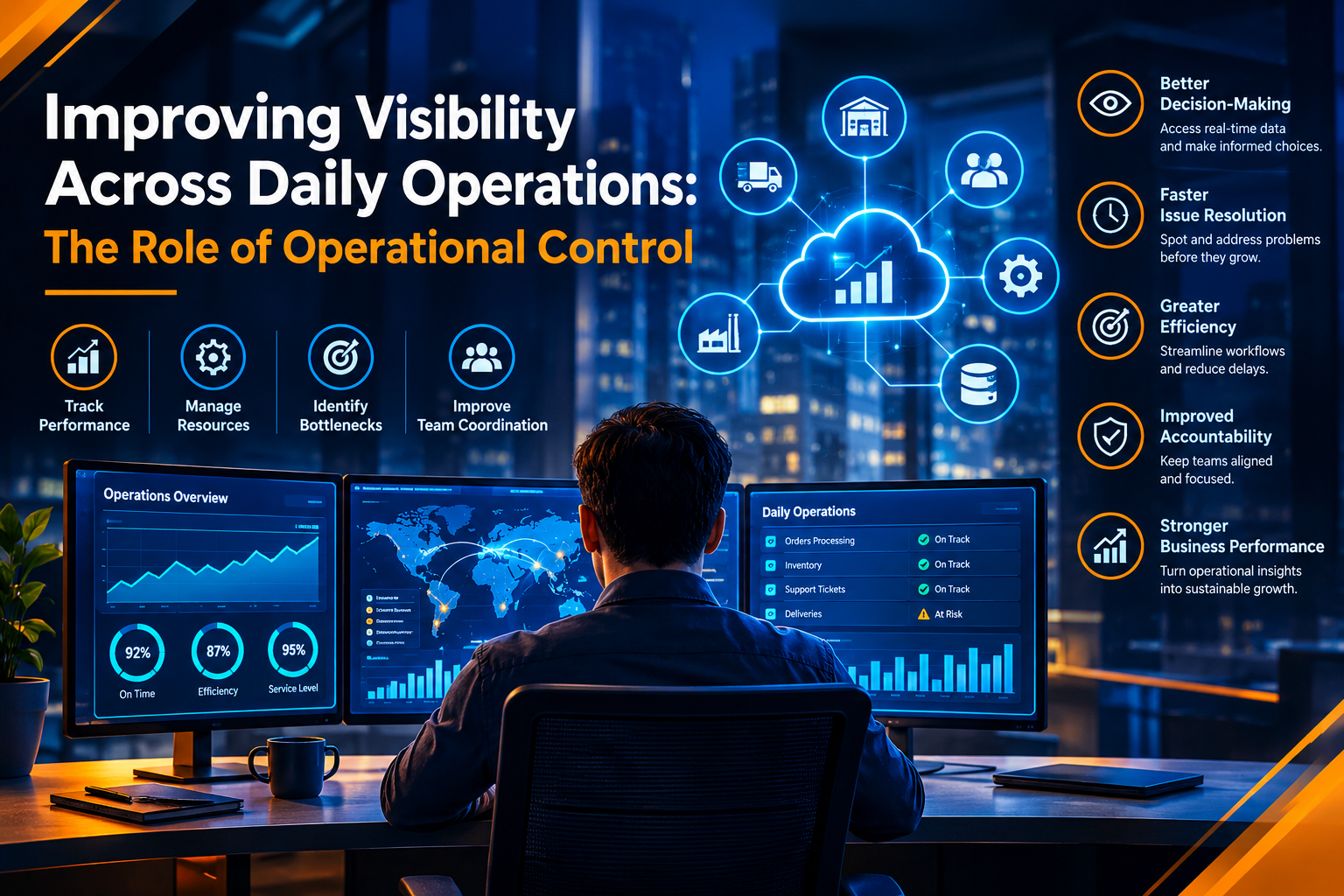
Managing daily business operations requires clear communication, accurate information, and consistent monitoring of activities. When teams rely on disconnected systems, manual reporting, or outdated information, it becomes difficult to understand what is happening across departments. Operational control helps businesses improve visibility, identify issues early, and make informed decisions.
By establishing clear processes, monitoring performance, and organizing operational data, businesses can reduce inefficiencies and improve accountability. Better operational visibility also helps managers coordinate teams, allocate resources, and maintain consistent service quality.
What Is Operational Control?
Operational control refers to the processes, systems, and practices businesses use to monitor daily activities and ensure that work aligns with established objectives. It helps managers understand performance, identify deviations, and take corrective action when necessary.
Effective operational control can include workflow monitoring, performance indicators, task tracking, resource management, reporting, and process standardization.
When these practices are supported by suitable technology, businesses can gain a clearer picture of daily operations and respond more effectively to changing requirements.
For business technology and operational support solutions, visit:
Why Visibility Across Daily Operations Matters
Operational visibility enables businesses to understand the status of tasks, resources, workloads, and business processes. Without it, managers may struggle to identify delays, resolve bottlenecks, or determine why performance is falling below expectations.
Improved visibility helps organizations:
- Track daily activities and task progress.
- Identify operational bottlenecks and recurring issues.
- Improve communication between departments.
- Monitor employee workloads and resource utilization.
- Make decisions using timely and accurate information.
- Strengthen accountability and process consistency.
These benefits support smoother operations and help businesses respond more confidently to operational challenges.
1. Centralize Operational Information
One of the first steps toward improving visibility is bringing important operational information into a centralized system. When data is spread across spreadsheets, emails, messaging platforms, and disconnected applications, employees may spend unnecessary time searching for updates.
Centralized systems allow authorized teams to access relevant information from a common location. Depending on business requirements, this may include project status, service requests, inventory information, task assignments, and performance reports.
A centralized approach reduces information gaps and makes it easier for managers to understand the overall operational situation.
2. Establish Clear Processes and Responsibilities
Operational visibility depends on knowing who is responsible for each task and how work should progress. Unclear responsibilities can result in duplicated efforts, missed deadlines, and delays in resolving problems.
Businesses should document important workflows, assign task ownership, and establish clear procedures for approvals and escalation.
When employees understand their responsibilities and reporting requirements, managers can monitor progress more effectively and identify areas where additional support is needed.
3. Monitor Key Performance Indicators
Key performance indicators (KPIs) help businesses evaluate whether daily operations are meeting their objectives. Selecting the right indicators provides useful insights without overwhelming managers with unnecessary information.
Depending on the business, operational KPIs may include:
- Task completion rates.
- Average response and resolution times.
- Order processing accuracy.
- Resource utilization.
- Service availability.
- Customer satisfaction.
- Operational costs.
Dashboards and scheduled reports can make these metrics easier to review. Businesses should regularly evaluate their KPIs to ensure they remain relevant to operational goals.
4. Use Automation to Reduce Manual Work
Manual updates and repetitive administrative tasks can delay reporting and increase the likelihood of errors. Automation can help businesses streamline routine activities and improve the consistency of operational information.
For example, automated notifications can alert managers when deadlines are approaching, while workflow rules can route requests to the appropriate team. Automated reports can also reduce the effort required to collect and organize performance data.
Automation should support clearly defined processes rather than reproduce inefficient workflows. Businesses should review existing procedures before deciding which activities to automate.
5. Improve Communication Between Departments
Daily operations often involve several departments working toward shared objectives. When teams use separate communication channels or maintain inconsistent records, important information may be overlooked.
Businesses can improve coordination by defining communication procedures, maintaining shared task records, and establishing regular operational reviews.
Integrated systems can also help departments exchange information more efficiently. Better communication ensures that teams have the context they need to complete tasks and respond to operational changes.
6. Identify Bottlenecks Before They Affect Performance
Operational bottlenecks occur when a particular task, process, or resource limits the progress of other activities. Examples include delayed approvals, overloaded support teams, unavailable equipment, or inefficient manual processes.
Consistent monitoring helps businesses identify recurring delays and determine their underlying causes.
Managers can review workflow data, compare performance across periods, and gather feedback from employees to locate problem areas. Once identified, bottlenecks can be addressed through process redesign, resource adjustments, automation, or additional training.
7. Strengthen IT Monitoring and System Reliability
Modern business operations depend on reliable applications, networks, devices, and cloud services. Technical disruptions can interrupt workflows and limit employees' access to essential information.
IT monitoring helps organizations observe system availability, performance, and potential technical issues. Alerts and incident tracking can support faster investigation and resolution.
Businesses can also benefit from proactive maintenance, appropriate access controls, and documented recovery procedures. These practices help maintain reliable technology environments that support daily operations.
Learn more about business technology solutions and support:
8. Improve Resource Allocation
Managers need accurate information about workloads, schedules, equipment, and available capacity to allocate resources effectively.
Operational dashboards and task management systems can help identify teams with excessive workloads, underused resources, or recurring scheduling conflicts.
By reviewing resource utilization and upcoming requirements, businesses can adjust assignments, prioritize important activities, and reduce avoidable delays.
Effective resource allocation supports productivity while helping organizations maintain a better balance between operational demand and available capacity.
9. Use Real-Time Reporting for Better Decisions
Delayed reports may prevent managers from responding quickly to changing conditions. Where appropriate, real-time or frequently updated dashboards provide a more current view of business activities.
For example, a service manager may monitor open support tickets, pending requests, and resolution times to identify workload issues. An operations manager may review order status and delivery progress to identify delays.
The value of reporting depends on data accuracy, suitable update frequency, and clear interpretation. Managers should combine operational metrics with relevant business context rather than relying on individual numbers alone.
10. Review and Improve Operational Processes Regularly
Operational control is not a one-time activity. Business requirements, customer expectations, and technology environments change over time, making regular reviews essential.
Organizations should evaluate whether existing processes remain effective, gather employee feedback, and investigate recurring operational problems.
Periodic reviews can identify opportunities to simplify workflows, remove unnecessary approval steps, improve documentation, and introduce suitable technology.
A continuous improvement approach helps businesses maintain operational visibility while adapting to new challenges and growth opportunities.
Common Challenges in Improving Operational Visibility
Businesses may face several obstacles when trying to improve operational control, including:
- Disconnected applications and inconsistent data.
- Unclear task ownership and reporting procedures.
- Excessive reliance on manual updates.
- Poorly selected or overly complex KPIs.
- Limited employee adoption of new systems.
- Insufficient training and process documentation.
- Inadequate monitoring of system performance.
Addressing these challenges requires a practical implementation plan, clear responsibilities, reliable data, and ongoing evaluation.
Conclusion
Improving visibility across daily operations enables businesses to understand workflows, monitor performance, and respond to problems more effectively. Centralized information, clear responsibilities, meaningful KPIs, automation, and regular process reviews all contribute to stronger operational control.
Businesses should begin by identifying information gaps and recurring inefficiencies, then introduce improvements that align with their operational goals. With the right processes and technology, organizations can improve coordination, support better decisions, and build more consistent daily operations.
For business technology, IT support, and operational efficiency solutions, visit: