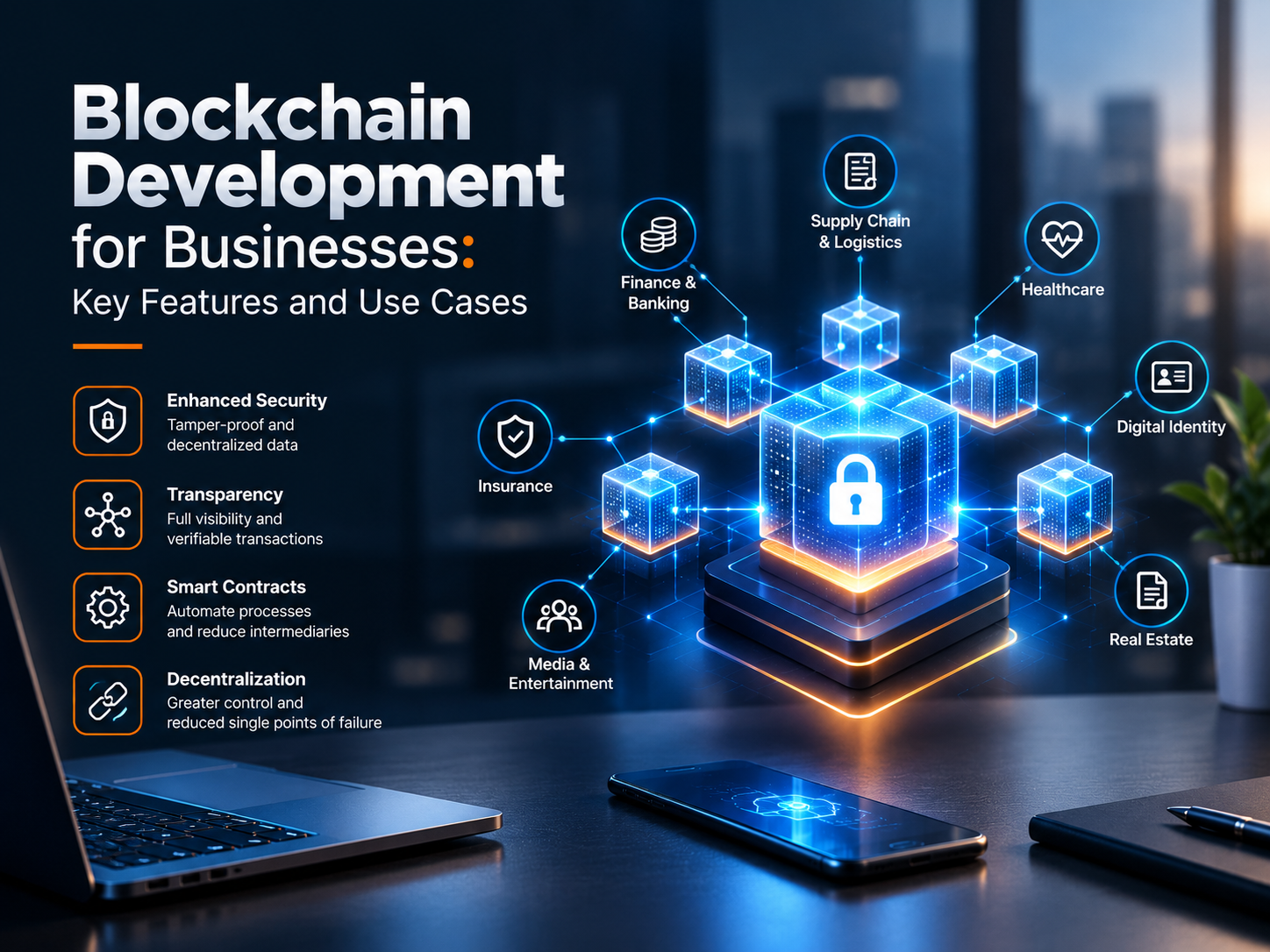
Blockchain Development for Businesses: Key Features and Use Cases
Blockchain technology has evolved beyond its early association with cryptocurrencies. Today, businesses across industries are exploring blockchain development to improve transparency, strengthen data security, streamline transactions, and build more reliable digital ecosystems.
For organizations looking to modernize their technology infrastructure, blockchain can provide new ways to manage data, automate processes, and establish trust between multiple parties without relying entirely on a centralized system.
What Is Blockchain Development?
Blockchain development involves designing and implementing blockchain-based applications, networks, smart contracts, and digital solutions that address specific business requirements.
Unlike traditional databases, blockchain records information in a distributed and tamper-resistant ledger. Transactions are validated and stored across a network, making unauthorized changes significantly more difficult.
Businesses can use blockchain technology for applications such as secure transactions, supply chain tracking, identity management, document verification, and automated business processes.
Key Features of Blockchain Technology for Businesses
1. Decentralized Data Management
Blockchain distributes data across multiple participants rather than keeping it within a single centralized database. This architecture can reduce dependency on a single point of control and provide greater transparency among authorized participants.
2. Enhanced Data Security
Blockchain uses cryptographic techniques to protect transaction records. Once information has been validated and added to the blockchain, modifying historical records can be extremely difficult without authorization from the network.
This makes blockchain useful for applications where data integrity and transaction security are important.
3. Transparency and Traceability
Blockchain can provide participants with a shared record of transactions. This helps organizations track activities and verify the history of assets, products, or transactions.
For example, supply chain businesses can use blockchain to track products from manufacturing through distribution and delivery.
4. Smart Contracts
Smart contracts are programs stored on a blockchain that can automatically execute predefined conditions.
Businesses can use smart contracts to automate processes such as:
- Payment settlements
- Agreement execution
- Transaction verification
- Insurance claims
- Supply chain workflows
- Digital asset transfers
Automation can reduce manual intervention and help create more consistent business processes.
5. Improved Transaction Efficiency
Traditional transactions may require multiple intermediaries and manual verification steps. Blockchain-based systems can simplify certain workflows by allowing authorized parties to share and verify transaction information through a common network.
The actual efficiency benefits depend on the blockchain architecture, transaction volume, regulatory requirements, and business process being implemented.
Common Blockchain Use Cases for Businesses
Supply Chain Management
Blockchain can provide end-to-end visibility into supply chain operations. Companies can record information about manufacturing, shipping, distribution, and delivery, creating a traceable history of products.
This can help organizations improve accountability and identify inefficiencies across complex supply chains.
Financial Services
Financial organizations can explore blockchain for transaction processing, settlements, digital assets, identity verification, and other financial workflows.
Blockchain-based systems can potentially reduce reconciliation requirements by allowing participants to work from a shared transaction record.
Healthcare
Healthcare organizations handle highly sensitive information that requires strong security and controlled access.
Blockchain solutions can support applications involving medical record management, credential verification, pharmaceutical supply chains, and secure information sharing. Proper privacy controls and regulatory compliance remain essential.
Digital Identity Management
Blockchain can support decentralized identity solutions that allow individuals or organizations to verify credentials without repeatedly relying on a centralized authority.
Potential applications include customer verification, professional credentials, access management, and identity validation.
Document Verification
Organizations can use blockchain to create verifiable records for important documents and digital assets.
Instead of storing sensitive documents directly on a blockchain, businesses can use blockchain records to verify the authenticity and integrity of information stored elsewhere.
Real Estate
Real estate transactions involve multiple parties, documents, approvals, and verification processes. Blockchain can be explored for property records, transaction histories, digital agreements, and smart-contract-based workflows.
Intellectual Property Management
Blockchain can help establish timestamped records associated with digital assets, creative works, and intellectual property.
This can provide an additional layer of evidence regarding ownership or the history of a digital asset, although legal ownership ultimately depends on applicable laws and contractual arrangements.
Benefits of Blockchain Development for Businesses
A well-designed blockchain solution can provide several potential advantages:
- Greater transparency between participating organizations
- Improved data integrity
- Automated workflows through smart contracts
- Better transaction traceability
- Reduced dependence on manual reconciliation
- Secure sharing of verified information
- Improved visibility across distributed business networks
However, blockchain is not automatically the right solution for every business problem. Organizations should first evaluate their requirements, data architecture, transaction model, compliance obligations, and expected return on investment.
Blockchain Development Challenges
Despite its potential, blockchain implementation comes with several considerations.
Scalability
Some blockchain networks may face limitations when transaction volumes increase. Choosing an appropriate architecture and consensus mechanism is important for enterprise applications.
Integration
Blockchain applications often need to communicate with existing ERP, CRM, databases, payment systems, and other business platforms. Proper API and integration planning is therefore essential.
Regulatory Compliance
Blockchain projects may involve sensitive data, financial transactions, digital assets, or cross-border operations. Organizations must consider applicable regulations before deployment.
Development Complexity
Building a production-ready blockchain solution requires expertise in blockchain architecture, smart contracts, cybersecurity, APIs, cloud infrastructure, and application development.
Data Privacy
Not all business information should be stored directly on a public or distributed ledger. Businesses need appropriate approaches for access control, encryption, off-chain storage, and privacy management.
How Businesses Can Approach Blockchain Development
A successful blockchain project generally starts with the business problem rather than the technology itself.
A practical approach includes:
- Identify the Business Requirement – Determine the process or problem that needs improvement.
- Evaluate Blockchain Suitability – Confirm whether a distributed ledger provides meaningful benefits.
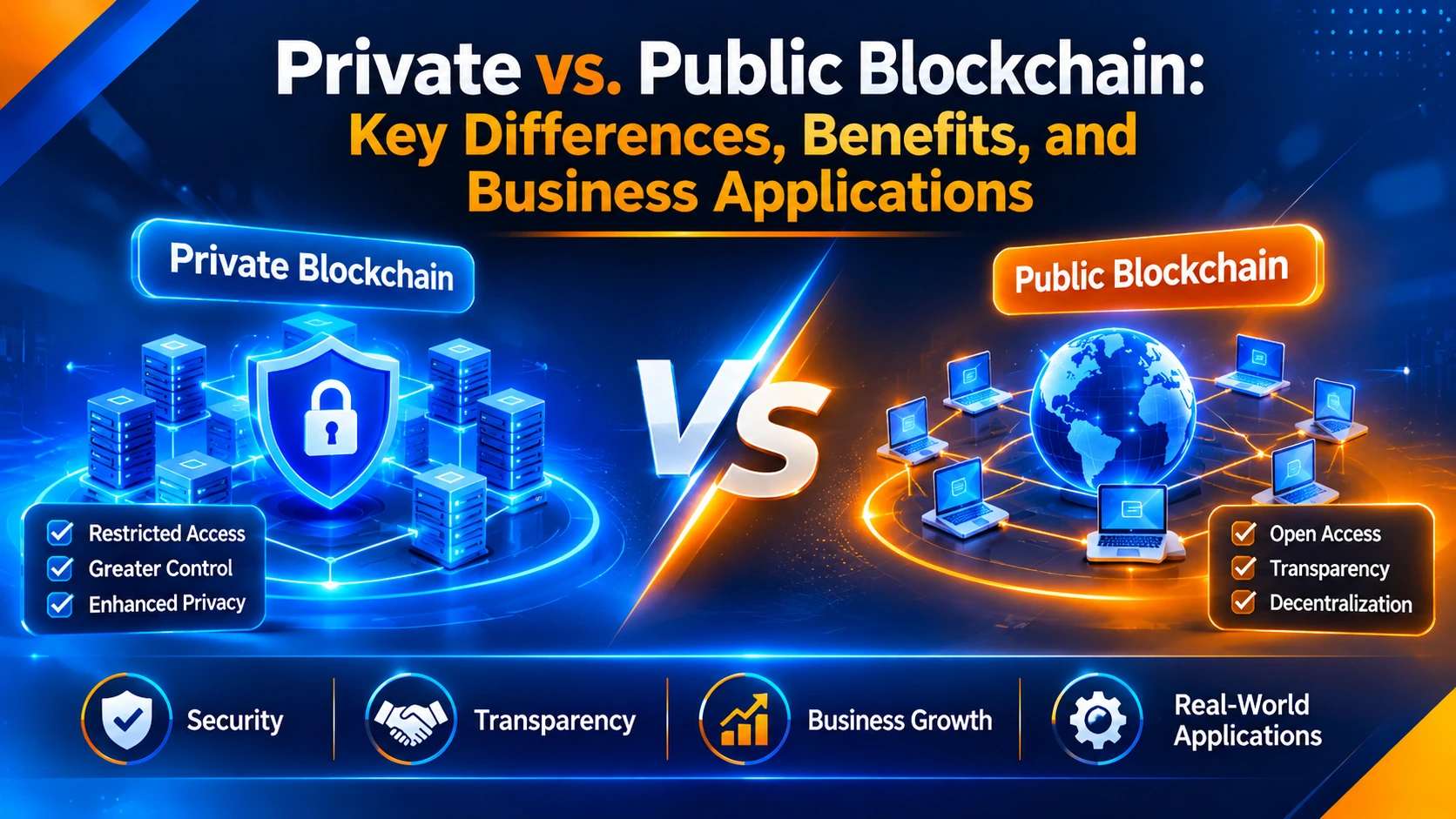
- Select the Appropriate Architecture – Choose between suitable public, private, or permissioned blockchain approaches.
- Design Smart Contracts – Define business rules that can be automated where appropriate.
- Develop and Integrate the Solution – Connect the blockchain application with existing business systems.
- Test Security and Performance – Conduct functional, security, scalability, and integration testing.
- Deploy and Monitor – Launch the solution and continuously monitor performance, security, and compliance.
Why Choose Professional Blockchain Development Services?
Enterprise blockchain development requires more than creating a decentralized application. Businesses need a solution that fits their existing technology environment and operational requirements.
Professional blockchain development can help organizations with blockchain architecture, smart contract development, decentralized applications, system integration, security, testing, and ongoing technical support.
Clopid provides Blockchain Solutions designed to help businesses explore blockchain technology for practical applications, including blockchain architecture, smart contracts, decentralized applications, and technology integration.
Explore Clopid's Blockchain Solutions to learn how blockchain technology can be incorporated into modern business systems.
Conclusion
Blockchain development is becoming an important technology consideration for businesses seeking stronger transparency, secure data management, automated workflows, and improved traceability.
From supply chain management and financial services to document verification and digital identity, blockchain has a wide range of potential business applications. However, successful implementation depends on selecting the right use case, architecture, security model, and integration strategy.
Businesses that evaluate blockchain based on genuine operational requirements can better determine where the technology can create measurable value and where traditional solutions may remain more appropriate.
Smart Technology. Smarter Business.